Switch back to main site : Click Here


Every finance leader knows the month that ends with the books finally tying out, leaving you too fried to do anything useful with them.
The close is supposed to set up the part that matters: the P&L flux that explains what actually happened, the executive summary that puts a point of view in front of leadership, the call only you can make. But by the time you get there, you've spent your judgment on plumbing. And leadership ends up deciding on last month's picture, because a real-time one was never on the table.
That's what the close really costs. The hours are just the part you can measure.
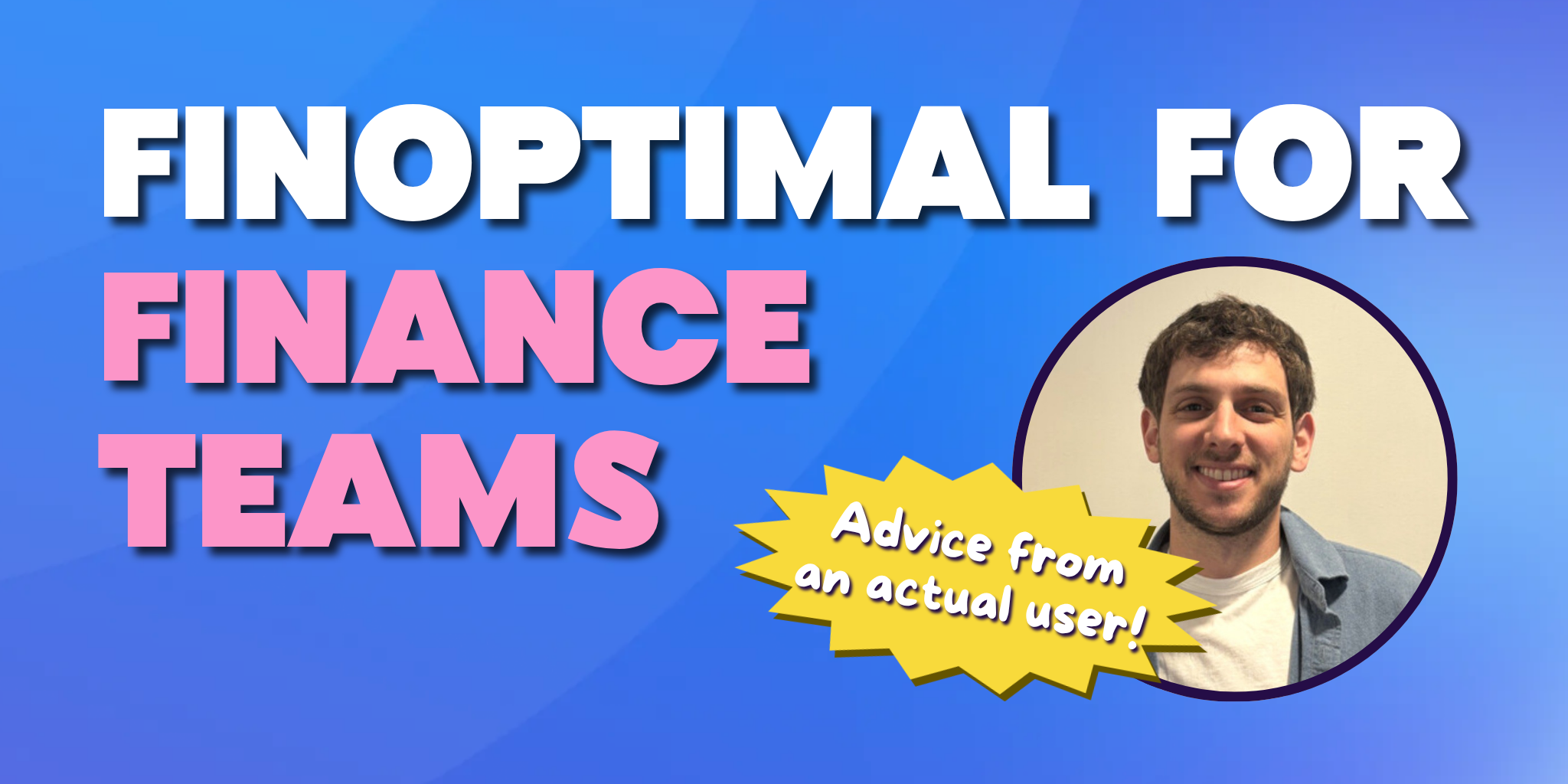
Jonah Rice, who leads Growth at FinOptimal, was formerly a Controller at a roughly 100-person SaaS company. One of his mandates was to pull the close in-house from an outsourced firm and tighten it from weeks to days. By 2024 the whole close was two people: him and one senior accountant, running the grind you already know — twenty-odd disjointed Excel workpapers, manual recs, accruals and JEs by hand, copy last month's entry into QuickBooks, update, and hope it still tied out.
He didn't dread any single piece of it. He dreaded the whole thing, because he knew what it was: homework for the business that nobody looked at until audit time — when what he wanted was his brain on revenue metrics and partnering with marketing and ops.
So he rebuilt it. He and his senior accountant consolidated those twenty workpapers into a single Booker and Wrangler workbook wired two-way to QuickBooks, then layered Accruer on top for prepaids, deferred revenue, fixed assets, and payroll accruals. They did it the sane way — weekly working sessions, one process at a time — and it delayed a staff-accountant hire by a year.
He isn't a vendor describing your pain from the outside. He sat in your chair, ran the rollout himself, and the rest of this is what he'd tell a peer weighing the same decision.
Before any of that, it's worth being clear about what the close costs, because it usually isn't the number that goes on the board first.
The biggest cost is opportunity cost. When two capable people are pulled into the close for weeks, the loss isn't the hours — it's everything that doesn't happen while they're closing. At Jonah's company that was repricing that didn't get done, a revenue stream that didn't get stood up, billing data that never made it into the customer portal. The work that actually moves the business.
The second cost compounds quietly: by the time the numbers are done, the sharp flux analysis and the real executive summary get whatever energy is left. You spend all your brainpower assembling the picture and have none left to explain it.
And the "do more with less" mandate is real. Jonah felt it personally, and it lands even harder today. Most finance leaders aren't asking whether to automate. They're wondering if they're already behind. The answer isn't more hype; it's a concrete change to how the close runs.
If you've looked at close automation and not pulled the trigger, it's usually one of a handful of reasons. Here's each one, and the honest answer from someone who's been on your side of it.
This is a common concern amongst financial leaders who already have a time-strapped team. Jonah himself felt this pain in his own implementation of FinOptimal, squeezing it in between projects. But his aha moment came seeing Booker and Wrangler in action: the close workbook in one file instead of twenty, talking to QuickBooks through a two-way sync so the balance-sheet drift just stops. Live data in, edits pushed back, no re-keying, no fingers-crossed tie-out. He'll tell you it was the first time in his accounting career he saw a genuinely different future than the one he'd been trained into.
The thing that actually changes your month isn't one clever feature — it's replacing the patchwork of files that don't talk to each other with infrastructure that does. Accruer is the payoff you feel after that clicks, not the reason to start.
Fair — and Jonah had the same experience. Before FinOptimal he tried the obvious things: Excel, and prepaid tools embedded in the AP system that technically worked. They just didn't move the needle. Every one was multi-step, sat outside the team's normal flow, and added steps instead of removing them. Nothing failed. The tools functioned. They just had no impact, and you never got into any kind of flow because everything still felt patched together.
That's the real test, and it's worth applying to FinOptimal too: not whether a tool does the thing — most do — but whether it removes work or just relocates it and adds another login. The reason this one landed for him is that it's QBO-native. Most tools connect to QuickBooks from the outside; FinOptimal is built inside it. For the person whose whole month is reconciling between systems, that's the difference between a tool you feel and one that becomes another tab.
That was Jonah's first instinct — he was actively scoping a staff-accountant hire. Instead, he ran the discipline he'd apply to any hire: get clean data on where the team's time actually goes, and whether a tool at a fraction of a person's cost can buy the capacity first.
A new hire inherits the broken process. They don't fix it, they run it — now two people are rolling forward twenty files instead of one. Buying the capacity that removes the work pushed his hire out twelve months, until a real business need, not the close, finally required it. In a "do more with less" year, that's the whole game: automate the plumbing before you staff it.
The honest answer: it takes real work, and anyone who tells you otherwise is selling you something.
Booker took Jonah roughly three months to implement — and he's the first to add the caveat. His team met once a week, moving one process at a time around a lot of other projects. They could have ripped the bandaid off in a week or two; but it was ninety days of multitasking, to change workflows while keeping the lights on.
What he tells peers now: block a focused week or two and consolidate instead of letting it stretch. A recent SMB implementation that mirrored his own — same end-state workbook in Booker and Wrangler — was completed in twenty to thirty days, and with AI handling most of the build it goes faster still. And Accruer onboarding for prepaids and fixed assets was a one-to-two-hour exercise. It needs an owner and some dedicated time. It does not need your quarter.
Every one of those objections rests on the same buried assumption — that the workpaper grind is just how the close works. It isn't. It's an artifact of tools that were never designed to talk to each other. You were trained to believe the copy-paste, the drift, the twenty files, and the fingers-crossed tie-outs are the job. They aren't. The job is interpretation and judgment — the flux, the executive summary, the strategic partnership. Everything upstream of that is plumbing, and plumbing can be automated.
That's what FinOptimal is for. It's QBO-native, built by accountants who've run this exact close — including a founder who runs his own firm on it — and it hands you back the part of the month you're actually paid for. You walk into leadership with real-time insight instead of last quarter's news. You get the time back, and you get the credibility.
Book time to learn how FinOptimal can transform your finance team →